
Let’s Address the Question Every Client Asks
Professional Carpet Cleaning vs Renting or Buying Your Own Machine
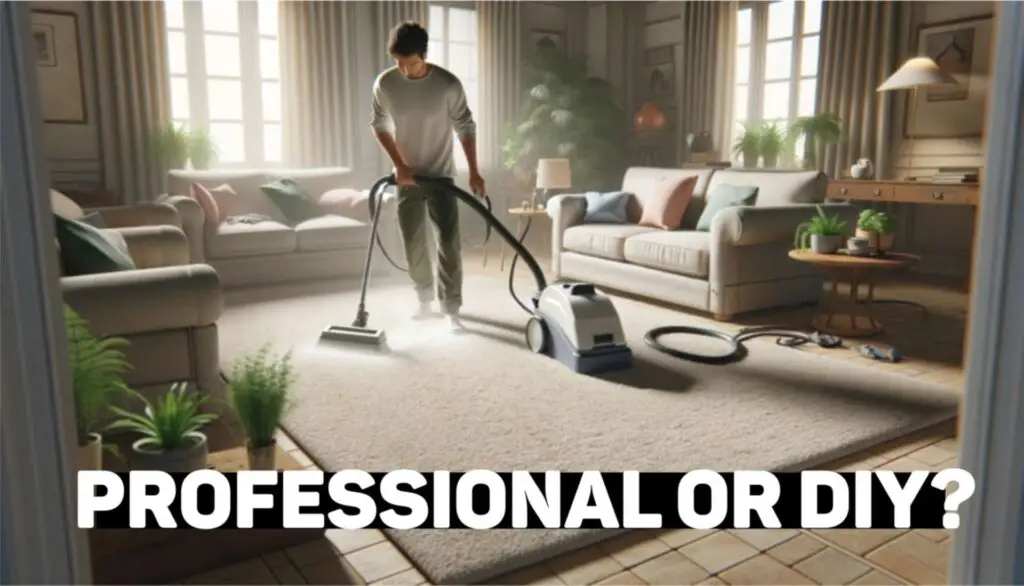
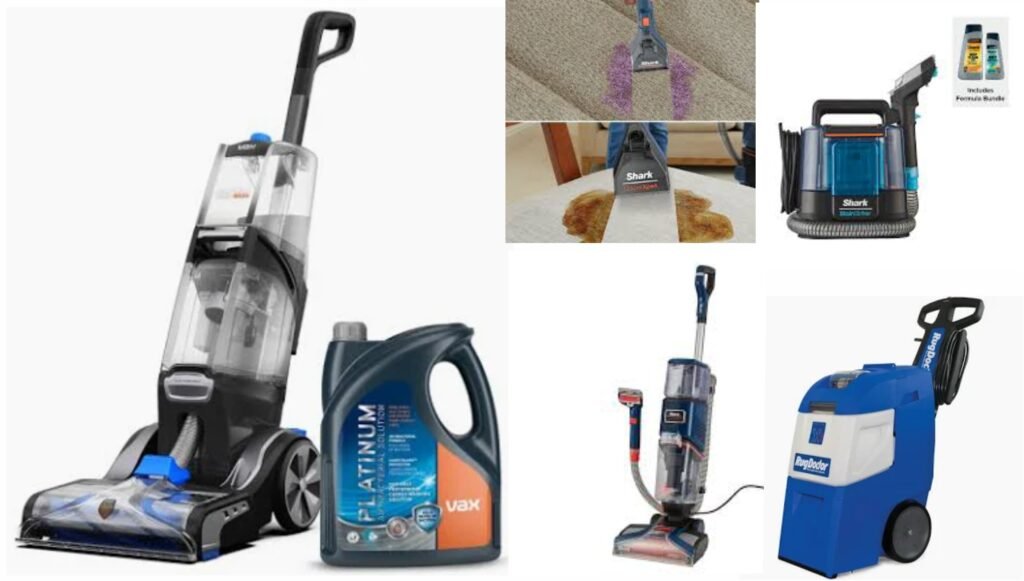
Many clients consider cleaning their carpets themselves. On the surface, it looks simple and cost-effective. Renting a Rug Doctor from a supermarket costs around £40 with chemicals, while buying a domestic extractor advertised as “dry in one hour” costs roughly £300.
At first glance, it seems logical: clean your own carpets, maybe help family members, even clean sofas — and save money.
So why do professional carpet cleaning companies exist at all?
Why Clients Choose DIY Carpet Cleaning
There are usually two main reasons:
Cost – professional services appear expensive compared to renting or buying a machine.
Lack of understanding of the process – many people believe carpet cleaning is simply running a machine over the surface.
There is also a hygiene argument. Rental machines are used in many homes and rarely cleaned properly between hires.
For families with children or pets, owning a machine can also feel like a practical solution for frequent accidents.
On the surface, the logic makes sense.
The problem lies in one crucial assumption — that these machines are suitable for proper carpet cleaning.
Why That Assumption Is Wrong
Domestic and supermarket machines are fundamentally not designed for professional-level carpet cleaning.
The issue is not effort or intention — it is equipment capability and process.
This single misunderstanding is what leads many homeowners to expensive mistakes, permanent carpet damage and recurring odours.
Carpet Cleaning Is Not Just a Machine — It’s a Process
Carpet cleaning is a technical process that requires knowledge, training and the correct tools.
It involves understanding:
carpet fibre types
levels and types of soiling
correct chemical selection
moisture control
correct rinsing and extraction
Professionals are trained to clean deeply without damaging fibres, leaving carpets hygienically clean and structurally intact — something DIY methods rarely achieve.
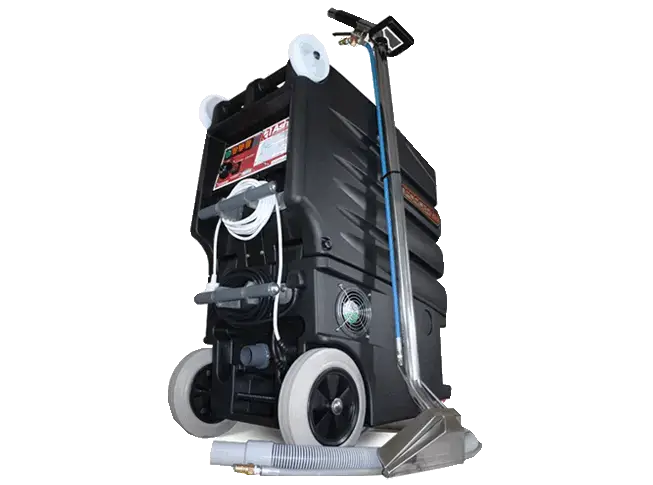
Professional Equipment vs Supermarket Carpet Cleaners
Power and suction performance
Professional machines deliver significantly higher suction and water pressure. This allows dirt, contaminants and moisture to be removed from deep within the carpet pile.
Domestic machines often apply more water than they can extract. As a result, carpets remain damp for many hours — sometimes days — creating ideal conditions for bacteria growth and unpleasant odours.
This is one of the most common reasons clients eventually call a professional.
The Real Carpet Cleaning Process (And What DIY Misses)
Professional extraction cleaning follows several essential steps:
Thorough vacuuming
This removes up to 60% of dry soil and debris, preparing the carpet for deep cleaning.Correct chemical selection
Professionals choose from dozens of detergents depending on fibre type and contamination.
DIY machines typically rely on a single general-purpose solution.Mechanical agitation
Detergent is worked into the carpet using rotary equipment to reach deeper layers — a step completely absent in DIY cleaning.Rinsing and extraction
The carpet is rinsed with clean water and fully extracted, removing dirt, residues and moisture.
pH Levels, Residue and Long-Term Carpet Damage
Carpet fibres have a natural neutral pH of around 7.
Cleaning chemicals raise this to 10–11 (alkaline).
Most DIY machines rinse carpets using more detergent, not clean water. This leaves residues trapped between fibres, keeping the carpet alkaline.
The result?
carpets re-soil very quickly
fibres attract dirt like a magnet
repeated DIY cleaning accelerates chemical degradation
fibres twist, lose elasticity and wear prematurely
Professionals can often tell immediately when carpets have been repeatedly cleaned using domestic machines.
Conclusion
Rental machines and supermarket devices such as Vax, Shark and similar are only half-measures. They offer very limited results, yet the cost — both short and long term — is relatively high.
My concern is not the money spent on the machine itself, but the value of the carpets and fitted flooring throughout the entire home. I can usually tell at first glance when a carpet has been cleaned by the homeowner. The pile is flattened, the carpet looks evenly greyed-out — even in areas with little or no foot traffic.
Repeated use of these machines damages carpet fibres very quickly. When the results are disappointing, clients often add more chemicals. Those chemicals break down dirt, but the machine simply doesn’t have the power to rinse it out. Instead of one or two passes, people end up making five or ten. The carpet becomes heavily over-wet, and once it finally dries, the visual result is still poor.
Very often, before the carpet has even dried properly, a strong musty or mouldy smell appears. That’s usually the moment when a professional is called in — sometimes at a higher cost, and I’ve even heard of companies charging extra as a lesson.
Week after week, I help clients who have fallen into this exact trap. That’s why I’m saying this clearly here on my blog: DIY machines should only ever be used in emergency situations. For regular carpet maintenance, leave the job to a professional.
Your carpets will thank you — by lasting several years longer.
