
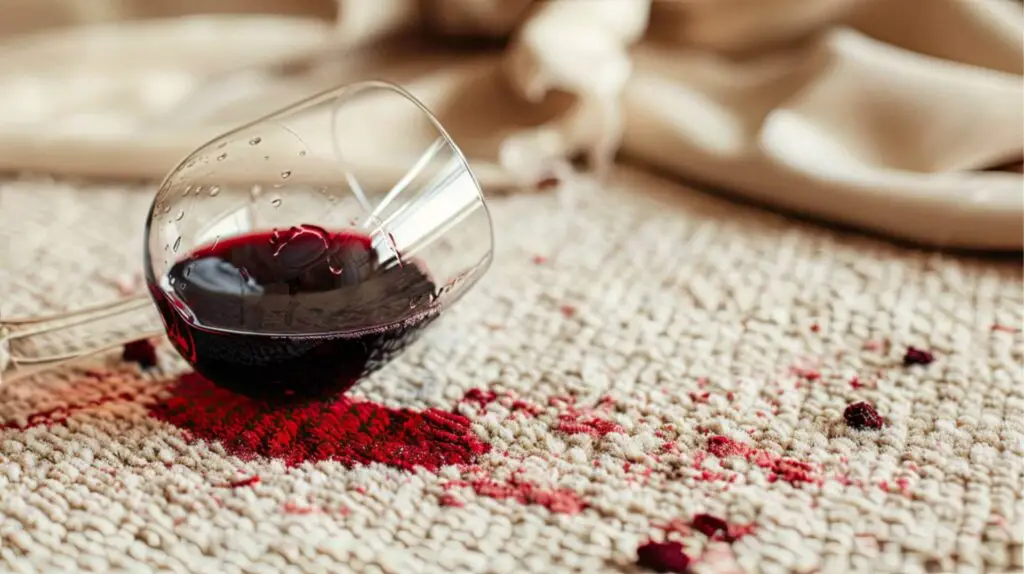
Act fast – time really matters
When red wine is spilled on a carpet, the most important factor is speed. The longer the wine sits, the deeper it penetrates the carpet fibres, making removal more difficult and increasing the risk of permanent staining. Stay calm, assess the situation, and start treating the stain immediately.
Step 1: Blot fresh red wine spills (never rub)
Blotting is the foundation of successful stain removal. Use a clean, white cloth or paper towel and gently blot the stain, starting from the outer edges and working towards the centre. This prevents the stain from spreading further.Do not rub. Rubbing forces the wine deeper into the carpet pile and can damage fibres. Replace the cloth or paper towel frequently so that you are lifting the wine out, not spreading it back into the carpet.At this stage, your goal is to remove as much liquid as possible before it dries.
Step 2: Use cold water – never hot
Once excess wine has been blotted, cold water can help lift remaining residue. Hot water should always be avoided, as heat can set the stain and make it permanent. Lightly dampen a clean cloth with cold water and gently dab the affected area. Continue blotting rather than rubbing. For improved results, carbonated water can be used instead of tap water. Its mild acidity can help break down the tannins in red wine. After treating the stain, blot the area with a dry cloth to remove excess moisture and allow it to air dry naturally.
If water is not enough – advanced DIY methods (with caution)
If blotting and cold water are not sufficient, stronger DIY methods may help. However, these methods carry risks and should always be tested on a small, hidden area first. Some carpets, especially wool or delicate fibres, can be permanently damaged by incorrect treatment.
Salt (for fresh spills only)
Salt can help absorb red wine while the stain is still wet. After blotting excess liquid, generously cover the stain with salt and leave it for a short time. Once the salt has absorbed the wine, vacuum it thoroughly. This method is less effective on older or partially dried stains.
White vinegar (never coloured vinegar)
Only white vinegar should be used. Other vinegars can create stains of their own. After blotting the wine, apply a small amount of white vinegar to the stain and allow it to sit briefly. Rinse with cold water and blot dry. This method helps neutralise the pigments but must be used carefully.
Hydrogen peroxide (use extreme caution)
Hydrogen peroxide can be effective but also acts as a mild bleaching agent. It should never be used on dark or coloured carpets without testing first. A common method involves mixing one part dish soap with three parts hydrogen peroxide, applying it carefully, then blotting and rinsing. This method is risky and should be considered a last resort.
Important warnings before you continue
- Never use hot water on red wine stains
- Never scrub or rub the carpet
- Avoid coloured cloths or towels
- Be cautious with DIY chemicals on wool or natural fibres
- Always test first in an inconspicuous area
Using the wrong method can permanently set the stain or damage carpet fibres.
When DIY methods are not enough
DIY techniques can help with fresh, small spills, but older stains or larger affected areas often require professional treatment. Overuse of household chemicals can weaken fibres, cause colour loss or leave residue that attracts dirt later.
Professional carpet cleaning uses controlled solutions, specialised equipment and proper dry soil removal to safely lift stains without damaging the carpet.
Final thoughts
Red wine stains are stressful, but they do not have to be permanent. Acting quickly, using the correct technique and knowing when to stop are key to protecting your carpets. When in doubt, professional cleaning is often the safest and most effective solution.
If you have questions about stain removal, carpet care or professional cleaning options, feel free to contact us at:
 office@trustcleaner.co.uk
We’re always happy to help — and no question is ever left unanswered.